Skip to product information
1 of 1

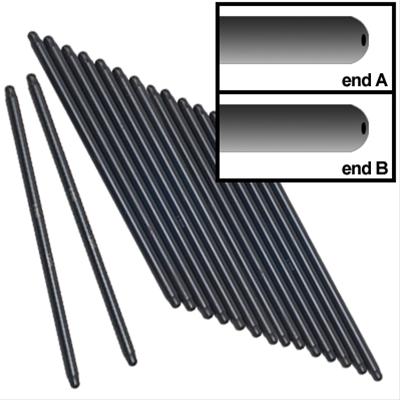
Manley 25799-16 Manley Chromoly Swedged End Pushrods

Manley 25799-16 Manley Chromoly Swedged End Pushrods

Regular price $158.50
Regular price Sale price $158.50
Sale Sold out

The Manley 25799-16 Manley Chromoly Swedged End Pushrods are premium chromoly pushrods engineered for valvetrain stability at high RPM. As the critical link between the lifter and rocker arm, pushrod stiffness directly affects valvetrain accuracy, valve float threshold, and ultimate power output. These pushrods are the right choice for street performance, bracket racing, and marine engines demanding consistent valvetrain geometry.

Constructed from seamless 4130 chromoly steel tubing, these pushrods feature precision-swedged ends for accurate ball seat engagement. The wall thickness is selected to provide the necessary column strength for aggressive cam profiles with high spring pressures. Each pushrod is cut to exact length with tight tolerances, eliminating the guesswork of adjustable valvetrain geometry setup. The outside diameter is compatible with factory and aftermarket guideplates without modification. The swedged end design provides a larger contact radius at the rocker arm ball, reducing side loading on the valve stem.

Each pushrod is heat-treated to optimal hardness for strength and fatigue resistance. Oil holes are positioned correctly to ensure consistent oil flow to the rocker arm assembly. The chromoly material offers significantly higher compressive strength over OEM pushrods -- critical for cam profiles with fast ramp rates and spring pressures exceeding 300 lbs open. The increased column strength improves valve timing accuracy, especially at RPM levels above 6,000, where stock pushrods begin to flex and introduce valvetrain instability.

Upgrading from factory pushrods eliminates a common valvetrain weak point. At RPM levels above 6,000, stock pushrods begin to flex, introducing valvetrain instability and inconsistent valve timing events. These pushrods maintain their dimensional integrity under load, ensuring every valve event happens exactly when the cam card says it should. Secure your Manley 25799-16 Manley Chromoly Swedged End Pushrods today and protect your valvetrain investment.

View full details

Frequently Asked Questions

What length and wall thickness options does this Manley Chromoly Swedged End come in?

These pushrods are available in lengths from 6.800 to 8.250 inches in 0.050-inch increments to accommodate various valvetrain geometries. Wall thickness options include 0.080-inch for street performance and 0.120-inch wall for high-RPM applications with spring pressures above 400 pounds open. These pushrods measure 5/16-inch or 3/8-inch outside diameter depending on the specific part number and application. Each pushrod is precision-cut to within plus or minus 0.005 inch of specified length for consistent valvetrain geometry.

How do these Manley Chromoly Swedged End prevent flex in high-RPM racing applications?

These pushrods use 4130 chromoly steel with 0.120-inch wall thickness to resist column flex and buckling at engine speeds exceeding 7,000 RPM. The one-piece construction with hardened tips eliminates the failure points found in welded pushrods that can separate above 400 pounds of open spring pressure. These pushrods deflect less than 0.002 inch under load compared to 0.008 to 0.012 inch deflection in standard mild steel pushrods. For engines with roller cam profiles exceeding 0.600 inch lift, the 3/8-inch diameter 0.120-wall option is recommended for valvetrain stability.

Can these Manley Chromoly Swedged End be used with stud-mounted rocker arms and guide plates?

Yes, these pushrods are designed to work with 7/16-inch stud-mounted rocker arms and 3/8-inch guide plates commonly used in small block and big block Chevrolet engines. The hardened tips resist galling against guide plate slots with clearances set at 0.030 to 0.050 inch for oil passage. When using stud girdles with these pushrods, verify rocker arm sweep across the valve stem remains centered within 0.040 inch. For engines with offset rocker arms, use 0.100-inch longer pushrods to correct geometry on the exhaust side.

What is the proper way to measure length for these Manley Chromoly Swedged End?

Measure pushrod length using an adjustable pushrod checker with the cylinder at top dead center on the compression stroke. Install the checker with zero preload and adjust until the rocker arm tip contacts the center of the valve stem, then add 0.020 to 0.060 inch preload for hydraulic lifters or 0.040 to 0.080 inch for solid lifters. Order these pushrods to the nearest 0.050 inch increment from your measured length for proper valve train geometry. Record the length after tightening the poly lock to 25 foot-pounds to simulate operating conditions.

Do these Manley Chromoly Swedged End require different length for aluminum versus cast iron heads?

Aluminum cylinder heads typically require these pushrods 0.020 to 0.060 inch shorter than cast iron heads due to the 0.020 to 0.030 inch thermal expansion of aluminum as it reaches 200 degrees Fahrenheit operating temperature. Pushrod length should always be measured at operating temperature with aluminum heads to account for the increased block and head expansion. For cast iron heads, these pushrods maintain geometry within spec throughout the temperature range from 70 to 210 degrees. Always recheck pushrod length after resurfacing the block deck or cylinder head surface.

Will these Manley Chromoly Swedged End clear aftermarket intake manifolds and valve covers?

These pushrods with 5/16-inch diameter clear most standard intake manifold runner walls and valve cover baffles found in aftermarket applications. For 3/8-inch diameter pushrods, verify clearance around the intake manifold runners especially on single-plane manifolds with 3,200 to 3,500 RPM operating ranges. These pushrods require minimum 0.100 inch clearance to the pushrod slot in the cylinder head to prevent contact at full valve lift. The 5/16-inch diameter option creates additional room for tall valve covers while maintaining strength for spring pressures up to 350 pounds.