Skip to product information
1 of 1

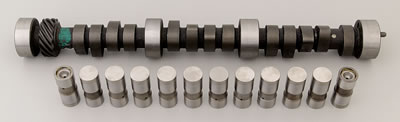
COMP Cams CL09-415-8 COMP Cams Magnum Retrofit Cam and Lifter Kits

COMP Cams CL09-415-8 COMP Cams Magnum Retrofit Cam and Lifter Kits

Regular price $647.55
Regular price Sale price $647.55
Sale Sold out

The COMP Cams CL09-415-8 COMP Cams Magnum Retrofit Cam and Lifter Kits are precision lifters from COMP Cams, engineered to follow the camshaft lobe profile accurately at all engine speeds. Lifters are a critical component in the valvetrain that directly affects valve timing, lift, and overall engine performance. Part 93666 is configured for its specific application with attention to fitment requirements.

COMP Cams lifters are manufactured to tight tolerances with precision-ground bodies and hardened faces. Hydraulic lifters feature properly calibrated internal valving for consistent lash adjustment throughout the temperature range. Solid lifters are designed for applications requiring mechanical adjustment of valve lash. Product 93666 is verified for correct specifications and dimensional accuracy before shipment.

Lifter selection must match the camshaft profile and intended operating range. COMP Cams lifters are engineered for compatibility with their camshaft profiles for consistent valvetrain operation. Proper lifter preload or lash adjustment is essential for achieving the advertised cam performance and ensuring long component life. SKU 393666 is backed by the manufacturer's quality guarantee and our satisfaction commitment.

Shop with confidence at GodsMods for quality automotive performance parts backed by expert product knowledge and reliable shipping.

View full details

Frequently Asked Questions

What RPM range does this hydraulic camshaft work best for street or track performance?

This hydraulic camshaft is designed for optimal power in the 1,500 to 6,500 RPM range with intake duration of 268 to 280 degrees and lobe lift around 0.300 to 0.340 inches producing 0.480 to 0.544 inches of valve lift. Peak torque occurs around 3,500 to 4,000 RPM and peak horsepower near 5,500 to 6,000 RPM for street applications. This camshaft requires upgraded valve springs with 120 to 150 pounds of seat pressure to prevent valve float above 5,500 RPM. A static compression ratio of 10.0 to 1 is recommended to fully utilize this camshaft's power band on 93 octane pump gas. For best drivability, pair this camshaft with a 2,500 to 3,000 RPM stall torque converter and 3.73 to 4.10 axle gears.

Do I need to upgrade my valve springs when installing this aftermarket performance camshaft?

Yes, this hydraulic camshaft requires upgraded valve springs rated for at least 0.550 to 0.600 inches of lift to prevent valve float at high RPM. Stock valve springs typically provide 80 to 100 pounds of seat pressure, while this camshaft requires 120 to 150 pounds of seat pressure and 300 to 350 pounds of open pressure at max lift. The installed spring height should be set at 1.800 to 1.900 inches with coil bind clearance of at least 0.050 inches at full valve lift. You must also verify piston-to-valve clearance of at least 0.080 inches on intake and 0.100 inches on exhaust to prevent contact at high RPM. Steel valve spring retainers and 10-degree valve locks are recommended to handle the increased spring pressure safely.

Will this hydraulic camshaft work with my stock engine computer and factory fuel injection?

This hydraulic camshaft has enough duration overlap that it will cause a rough idle with vacuum dropping to 10 to 12 inches of mercury instead of the 18 to 20 inches that stock computers expect. For OBD-II vehicles, you will need a custom tune via HP Tuners or SCT software to adjust idle airflow, fuel trims, and timing tables for this camshaft. Carbureted engines simply require jetting changes, typically increasing primary jets by 4 to 6 sizes and setting initial timing to 14 to 16 degrees. The camshaft's idle quality is noticeable but manageable for street driving with the proper tuning adjustments. For vehicles with electronic throttle control, the idle airflow must be recalibrated to prevent stalling when coming to a stop.

What intake manifold and carburetor work best with this hydraulic performance camshaft setup?

This hydraulic camshaft works well with a dual-plane intake manifold like an Edelbrock Performer RPM that maintains intake velocity for good throttle response from 1,500 to 6,500 RPM. A 650 to 750 CFM carburetor is ideal for small-block engines with this camshaft, while big-block applications require 750 to 850 CFM depending on displacement. For fuel-injected engines, a single-plane intake with a 1,000 to 1,200 CFM throttle body works well above 3,000 RPM. The camshaft's wide power band benefits from a vacuum-secondary carburetor that provides excellent street manners and automatic tuning. For maximum performance, a 750 CFM carburetor with electric choke and vacuum secondaries provides the best combination of cold-start drivability and wide-open throttle power.

Can I reuse my factory timing chain and gears when installing this hydraulic performance camshaft?

You should always replace the timing chain and gears with a performance double-roller timing set when installing this hydraulic camshaft. Factory timing chains stretch over 50,000 to 100,000 miles, introducing 2 to 4 degrees of timing variation that reduces camshaft performance. A double-roller timing chain set with a 9-keyway crank sprocket allows you to advance or retard camshaft timing by up to 4 degrees for fine-tuning the power band. The camshaft's intake centerline should be installed at 106 to 108 degrees for best street performance. A new timing chain set also ensures proper oil pump drive engagement and eliminates the risk of a worn chain skipping teeth on a freshly assembled engine.