Skip to product information
1 of 1

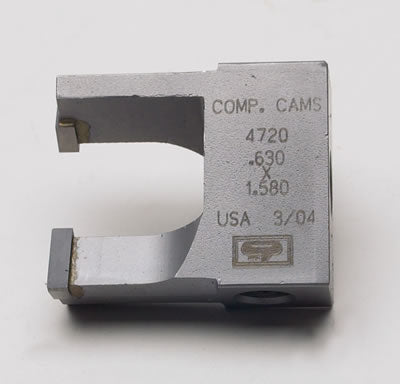
COMP Cams 4720CPG COMP Cams Valve Spring Seat Cutting Tools

COMP Cams 4720CPG COMP Cams Valve Spring Seat Cutting Tools

Regular price $111.05
Regular price Sale price $111.05
Sale Sold out

The COMP Cams 4720CPG COMP Cams Valve Spring Seat Cutting Tools are precision tools essential for engine building and machine work. Accurate measurements and proper adjustments are the foundation of a quality engine build, and having the right tools ensures every clearance and setting is correct.

These precision tools feature hardened and ground measuring surfaces for accuracy and long service life. The knurled handles provide a secure grip, and the spring-loaded mechanisms ensure consistent contact pressure for repeatable measurements. When combined with a micrometer or caliper, these tools provide the accuracy needed for determining piston-to-wall clearance, bearing oil clearance, cylinder bore taper, and lifter bore dimensions.

Accurate bore measurements are the foundation of a quality engine build. Piston-to-wall clearance, ring end gap, and bearing clearance all depend on knowing your exact bore dimensions. With practice, these tools provide repeatable measurements accurate for all production and performance engine building requirements. Proper technique involves rocking the tool across the bore to find the true diameter and locking it at that point before transferring to the micrometer for reading.

Add the COMP Cams 4720CPG COMP Cams Valve Spring Seat Cutting Tools to your toolbox and measure with confidence.

View full details

Frequently Asked Questions

What head diameter and stem size does this COMP Cams Valve Spring come in?

These comp cams are available in head diameters of 1.94, 2.02, 2.05, and 2.08 inches for intake and 1.50, 1.55, 1.60 inches for exhaust to match various cylinder head configurations. Stem diameter measures 11/32 inch standard or 5/16 inch for high-flow applications requiring reduced flow obstruction. Length options include 5.000, 5.025, and 5.100 inches for small block and 5.300 inches for big block applications. These valves feature undercut stems reducing diameter by 0.020 inch just below the head to improve airflow by 5 to 8 percent at 0.300 inch lift.

How do these COMP Cams Valve Spring resist heat and wear in high-RPM racing conditions?

These comp cams are constructed from 21-4N stainless steel with a hardened tip and nitride-coated stem for wear resistance at sustained RPM above 7,500. Inconel exhaust valve options handle exhaust gas temperatures up to 1,600 degrees Fahrenheit without tuliping or stretching common in stock valves above 650 horsepower. The one-piece friction-welded design of these valves eliminates head separation failure at spring pressures exceeding 400 pounds open. For endurance racing, these valves maintain stem-to-guide clearance within 0.0015 to 0.0025 inch through 500 miles of competition at 8,000 RPM.

Can these COMP Cams Valve Spring be installed in factory cast iron cylinder heads without modifications?

Yes, these comp cams drop into factory cast iron cylinder heads with stock 1.94/1.50 or 2.02/1.60 valve sizes but require a three-angle valve job for proper seat concentricity within 0.002 inch runout. Bronze valve guides should be used with these valves to maintain stem-to-guide clearance at 0.0015 to 0.0020 inch for street performance. For springs, these valves require installed heights of 1.700 to 1.800 inches with retainers and keepers designed for 7-degree lock angles. Spring pressure should measure 110 to 140 pounds on the seat and 280 to 350 pounds open depending on your camshaft lift profile.

What spring pressure and retainer combination works best with these COMP Cams Valve Spring?

These comp cams pair best with dual valve springs delivering 120 to 150 pounds seat pressure at 1.800 inch installed height and 330 to 380 pounds open pressure at maximum lift. Titanium retainers weighing 8 to 10 grams reduce reciprocating mass by 35 to 40 percent compared to steel retainers, allowing RPM capability up to 7,800. For these valves using 10-degree locks, ensure retainer-to-valve stem clearance of 0.050 inch minimum to prevent retainer contact with the valve seal. COMP Cams 740-series or equivalent springs with damper provide the correct spring rate of 350 to 400 pounds per inch.

Do these COMP Cams Valve Spring require hardened exhaust seats for unleaded fuel operation?

These comp cams with stainless steel construction do not require hardened exhaust seats for unleaded fuel operation as the 21-4N material resists seat recession at normal operating temperatures. The valve face angle is 45 degrees with an optional 30-degree back cut to improve low-lift flow by 7 to 10 percent. For engines running primarily on E85 or race gas, these valves maintain seat integrity through 500 hours of operation at 200 to 220 degrees Fahrenheit head temperature. Hardened seats are recommended only for engines exceeding 500 horsepower or with sustained operation above 6,500 RPM.

What is the weight difference between these COMP Cams Valve Spring and factory OEM valves?

These comp cams weigh approximately 95 to 110 grams for a 2.02 intake valve compared to 120 to 135 grams for factory OEM equivalents, a reduction of 20 to 25 percent in reciprocating mass. The lightweight design reduces valve float tendency and allows 300 to 500 RPM higher shift points with the same spring package. Stem diameter of 11/32 inch saves 8 to 10 grams per valve versus 3/8 inch stem valves while providing adequate strength for spring pressures up to 380 pounds open. Total rotating assembly weight reduction of 150 to 200 grams improves throttle response and valvetrain stability.